New York, Looking Up Without Asking Permission
New York doesn’t whisper here, it mutters to itself while doing three other things. This corner feels unmistakably Manhattan, the kind of place where the grid loosens just enough to remind you it was once negotiated, not ordained. Brick walk-ups lean in from the left, their fire escapes clinging like afterthoughts, while to the right a broad, stubborn hotel façade rises with that prewar confidence only New York ever perfected—heavy stone at the base, endless rows of windows above, flags snapping in the wind as if to say yes, this still matters. Behind and between them, glass towers intrude, sharp and reflective, catching slices of sky and returning them cleaner, colder, more expensive. The camera points upward because that’s what New York teaches you to do early on: look up, recalibrate your scale, accept that you’re temporary.
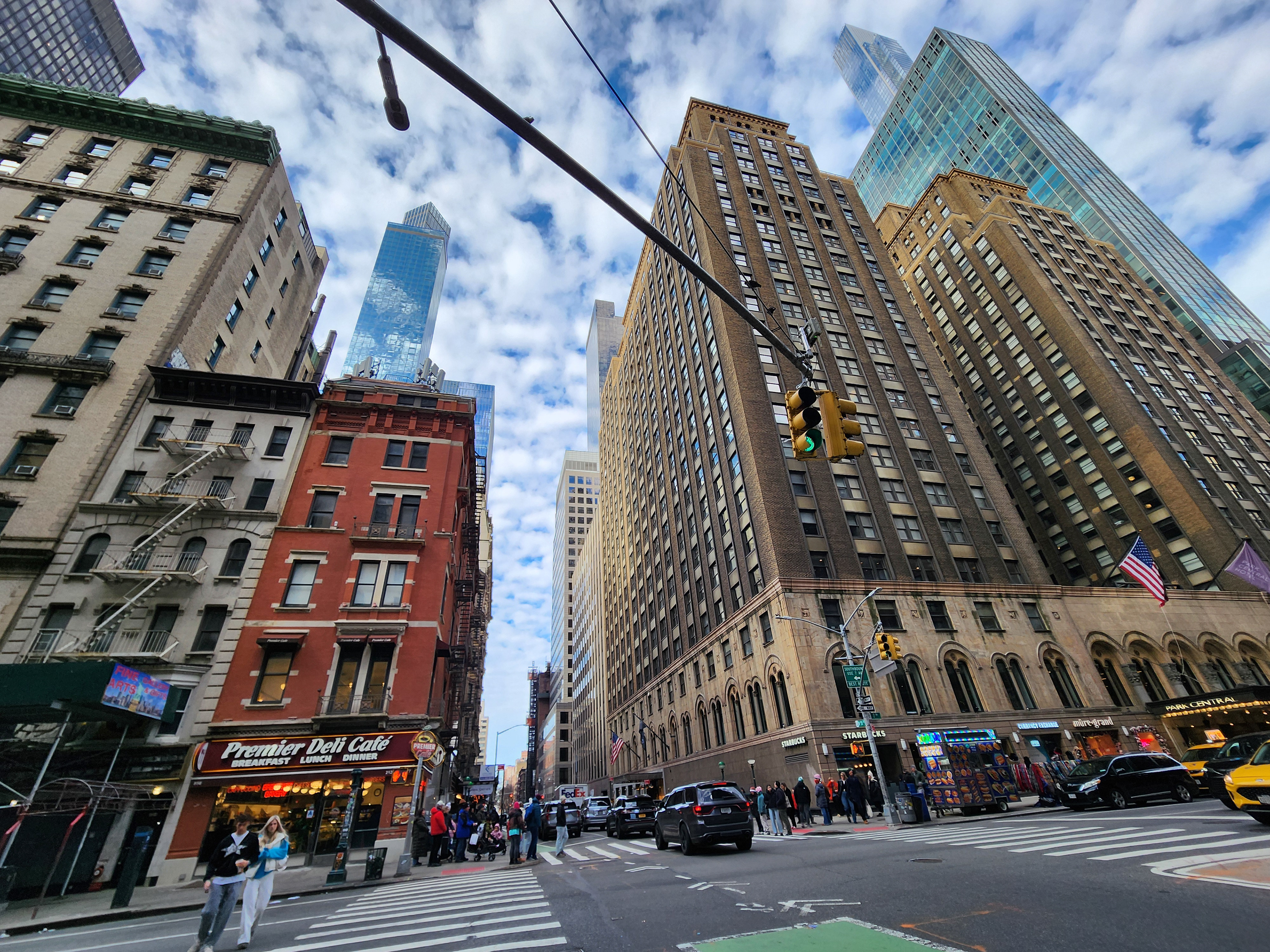
At street level, it’s pure choreography. Crosswalk stripes fan out like stage markings, and people step into them without ceremony, mid-conversation, mid-thought, mid-life. A green traffic light hangs slightly off balance, glowing with municipal authority, giving permission no one actually waits for. Yellow cabs nose forward, black SUVs idle with the low hum of entitlement, delivery vans double-park because of course they do. On the corner, the deli throws warm light onto the sidewalk, promising breakfast, lunch, dinner, salvation—New York hospitality distilled into a laminated menu and a coffee that’s hotter than you expected. Above it all, the buildings watch, bored but attentive, having seen this exact scene replayed a few million times with different coats, different shoes, same urgency.
What makes it feel so New York is the compression. Time periods stacked vertically, ambitions crossing horizontally, everyone sharing the same sliver of asphalt for a moment before scattering. The old façades carry scars—patched stone, mismatched windows, metal ladders bolted on long after the architects were gone—while the newer towers gleam with the confidence of capital that arrived late but loudly. Nobody apologizes. That’s the deal here. You build, you rebuild, you coexist. The sky above is busy too, clouds stretched thin and restless, like they’re just passing through on something more important.
The mood settles in quietly, a familiar New York melancholy that isn’t sadness so much as awareness. You feel small, but not erased. Anonymous, but included. This city doesn’t care who you are, yet somehow makes room for you anyway, one crosswalk at a time. The photograph freezes it—the leaning perspective, the upward pull, the casual collision of lives—but the real New York slips past as soon as the shutter closes. Someone misses the light. Someone gets their coffee. Someone looks up for half a second and then remembers they’re late. The city keeps going, dense and impatient and oddly tender, already building the next version of itself right over your footprints.