Recent Posts
Why Lisbon Left the Carmo Convent Roofless
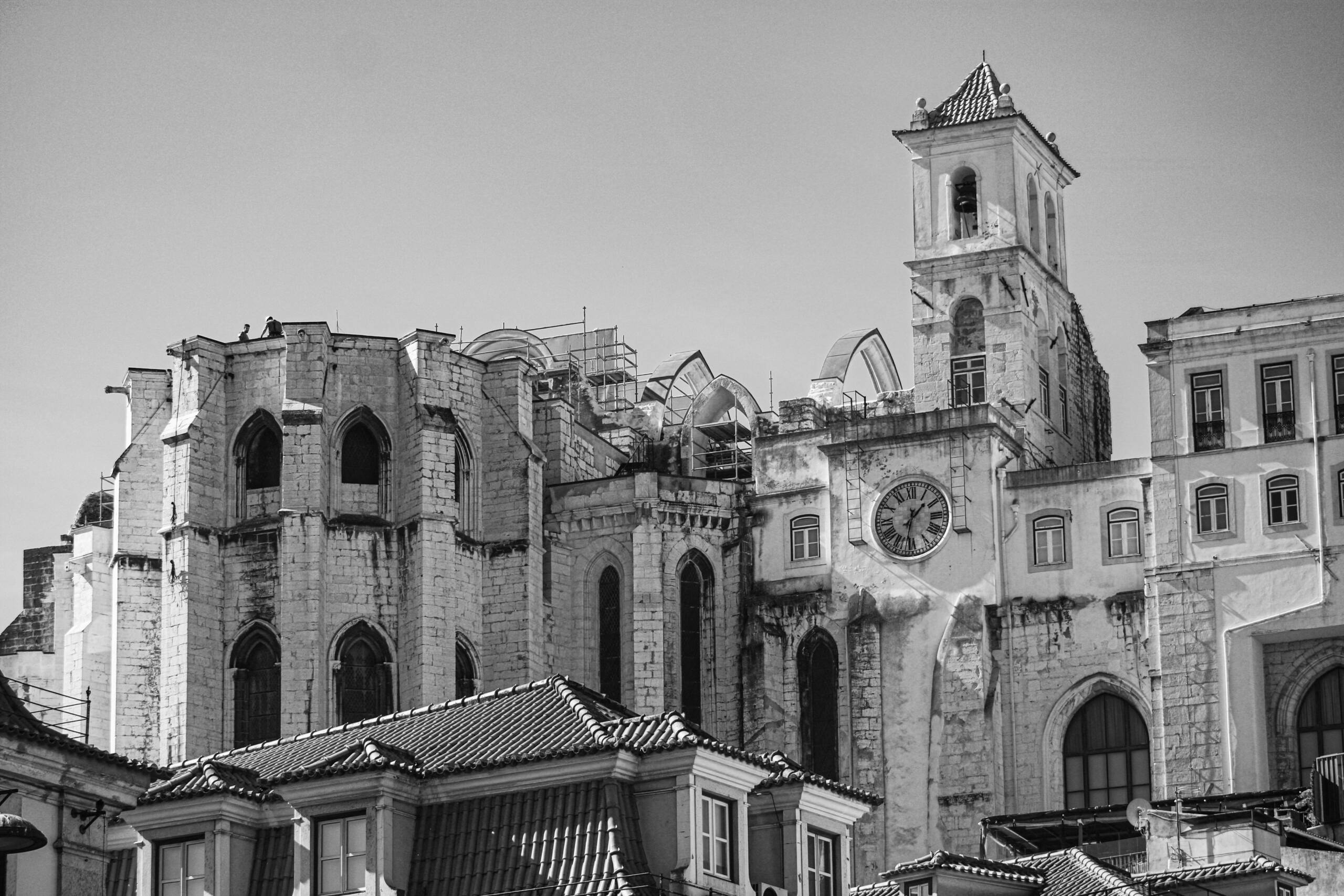
The arches at the top of the Carmo Convent carry nothing. They spring, they curve, they meet at the crown, and then there’s sky. Everything they were built to hold came down on 1 November 1755, and nobody put it back. Look closely at the roofline and you’ll see scaffolding tucked between the bays, which is the detail that gives the game away: somebody is paying to keep this building broken.
read more
Gauguin's Arearea: The Red Dog Paris Mocked in 1893 and the Painting He Bought Back
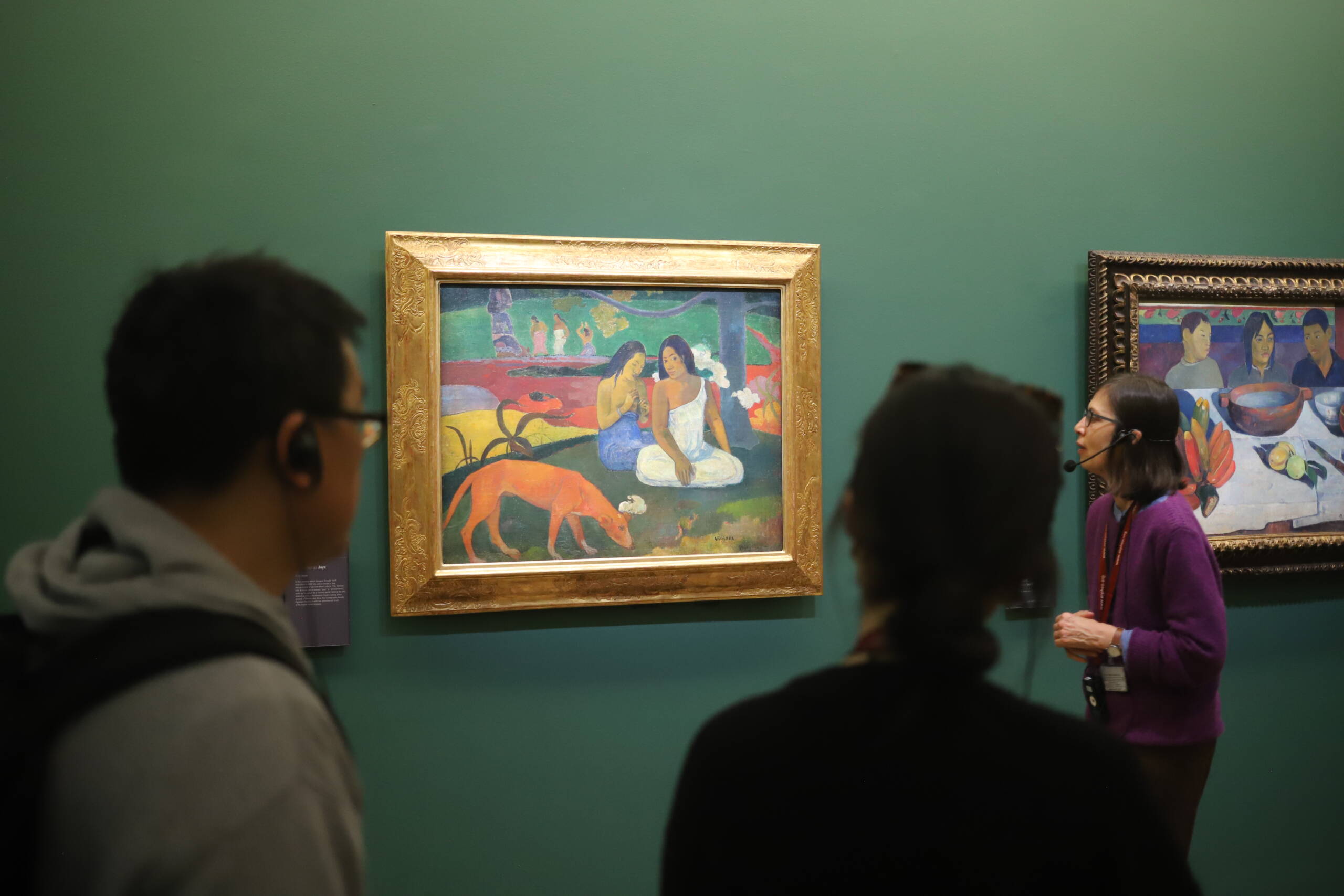
The guide in the purple cardigan has a microphone curled against her cheek, and the young man in the grey hoodie has a receiver tucked in his ear. Between them hangs a painting that could have used her in 1893. When Paul Gauguin’s Arearea first went on show in Paris, it carried a Tahitian title almost nobody in the gallery could read. No one stood beside it to explain.
Gauguin painted it in 1892, about a year after he sailed for Tahiti looking for a way of life he thought Europe had lost.
read more
Plum Tart Is Coming, and These Are the Plums Going Into It
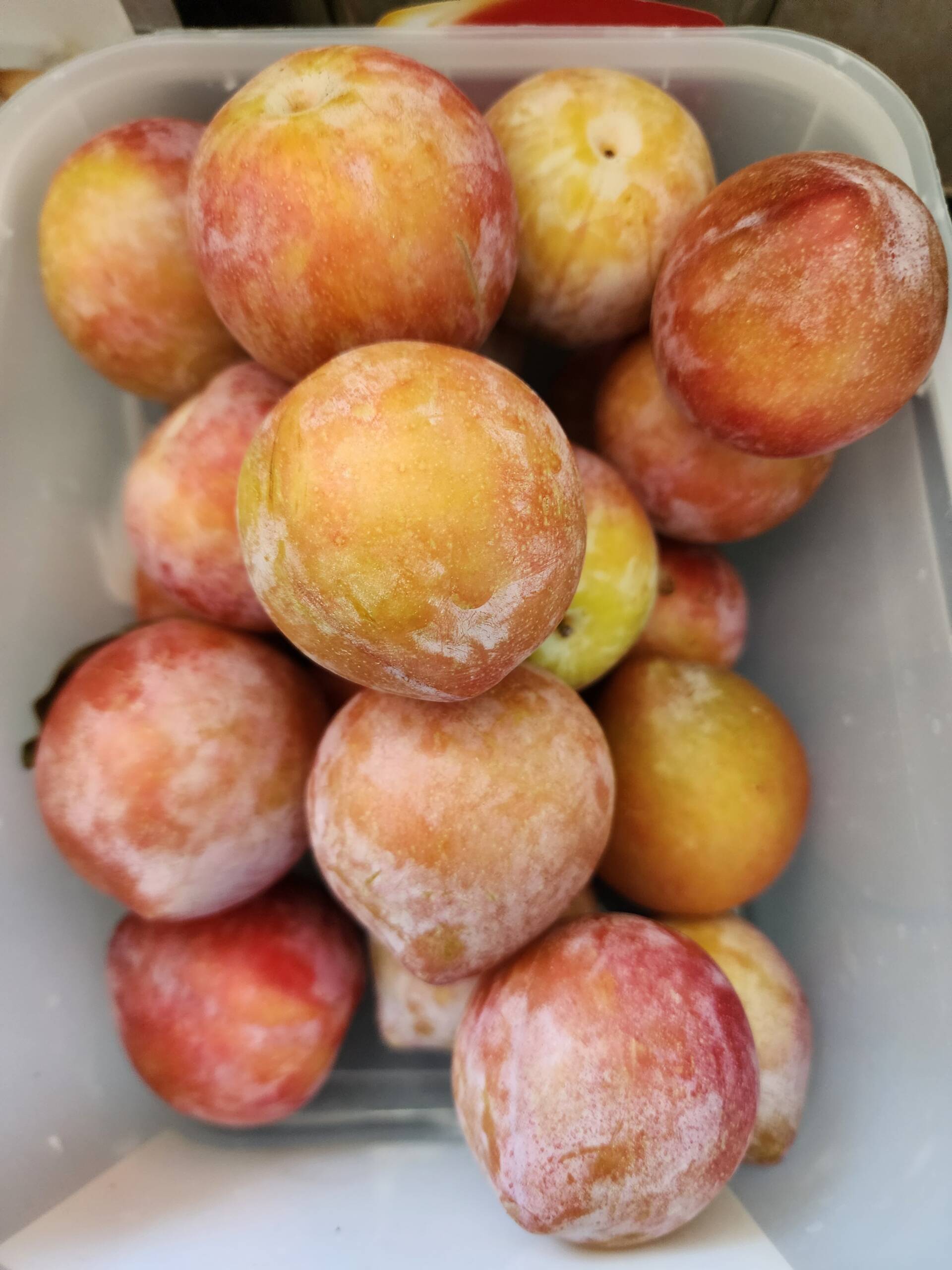
A tub of plums landed on the counter this morning. They’re too good to just eat over the sink, so there’s going to be a tart. Soon.
Look at that dusty white coating. That’s the bloom, a natural wax the fruit makes on its own, and it rubs off the moment you handle it. When it’s still this thick nobody has been polishing them or digging through the box. They got here pretty much the way they left the tree.
read more
Bandinelli's Hercules and Cacus: It Looks Like a Forced Sexual Act Prelude
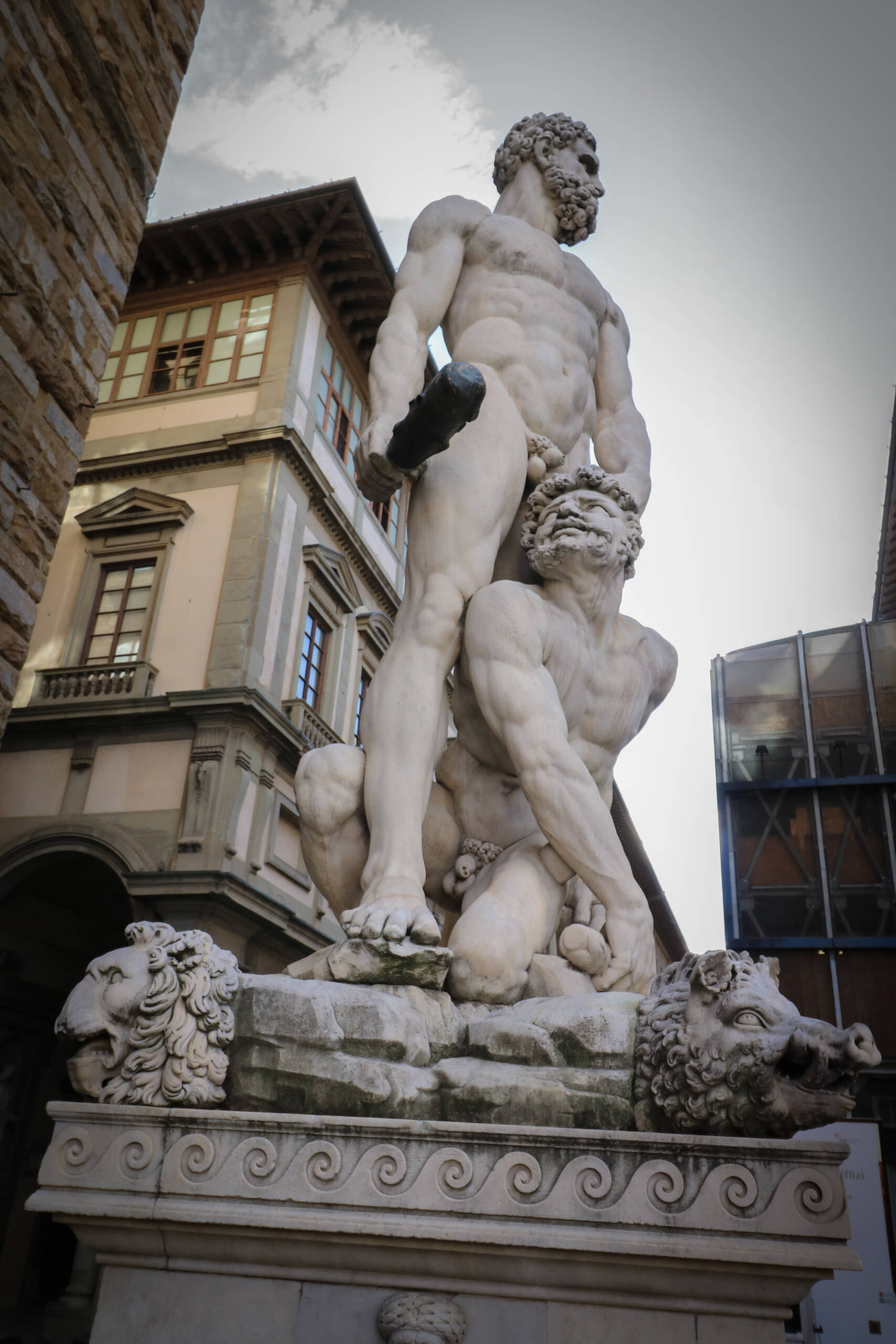
Stand under Baccio Bandinelli’s Hercules and Cacus in Piazza della Signoria and look up. Hercules has a fistful of Cacus’s hair. Cacus is down on one knee, face tipped upward, parked right at Hercules’s hip with his mouth half open. From below, the two heads and Hercules’s genitals stack into a single vertical line. My first thought wasn’t triumph. It looked like the moment before a forced sex act.
I don’t think that’s a dirty mind at work.
read more
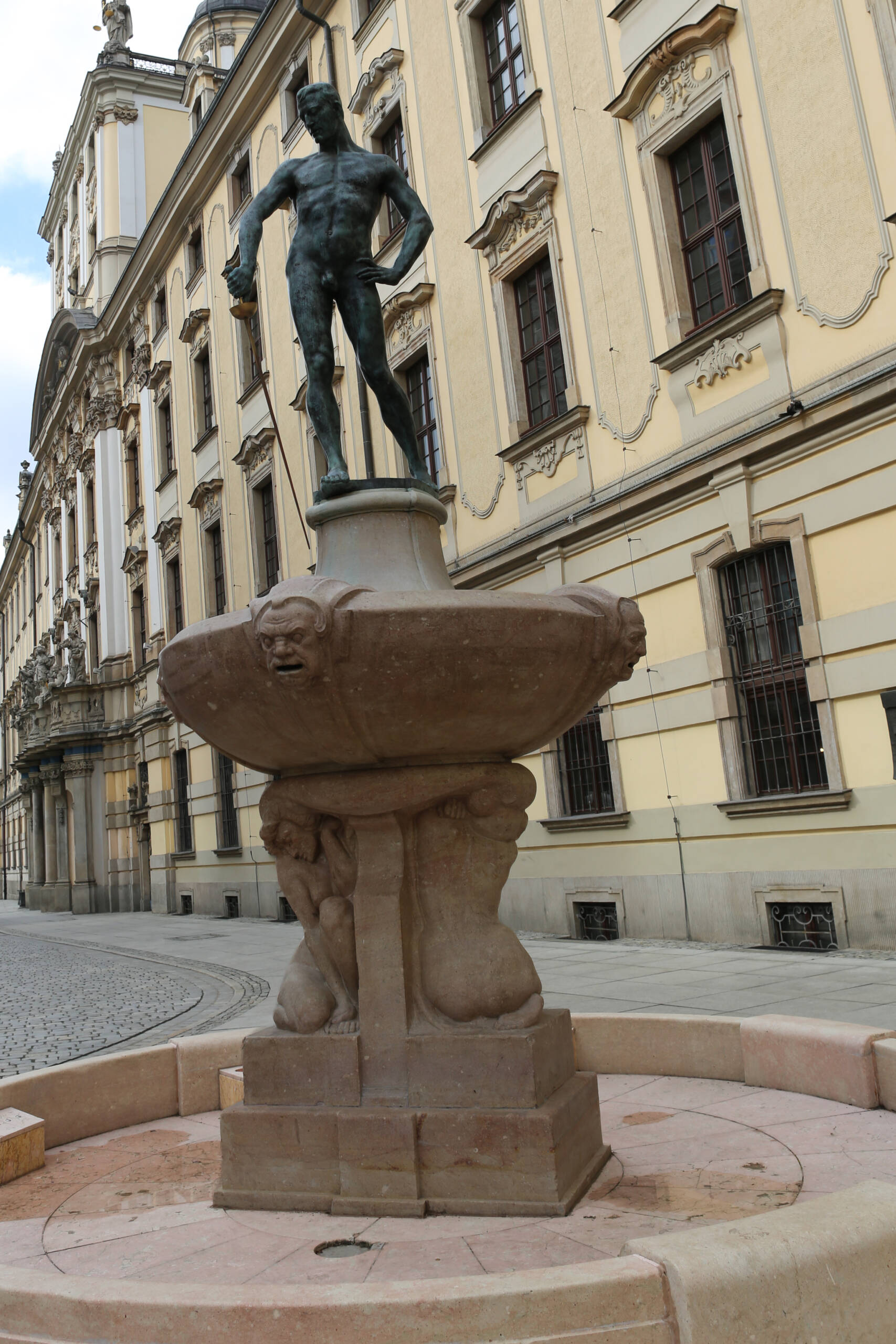
The Fencer of Wroclaw: A 1904 Fountain That Outlived the City That Commissioned It
On 26 November 1904 a naked young man with a sword went up on a small square in front of the university’s main building in Breslau, and the city has been telling stories about him ever since. He is still there. The buildings behind him are the same yellow Baroque wing, the square has the same awkward triangular shape, and the water still comes out of the four faces on the rim of the bowl.
read more
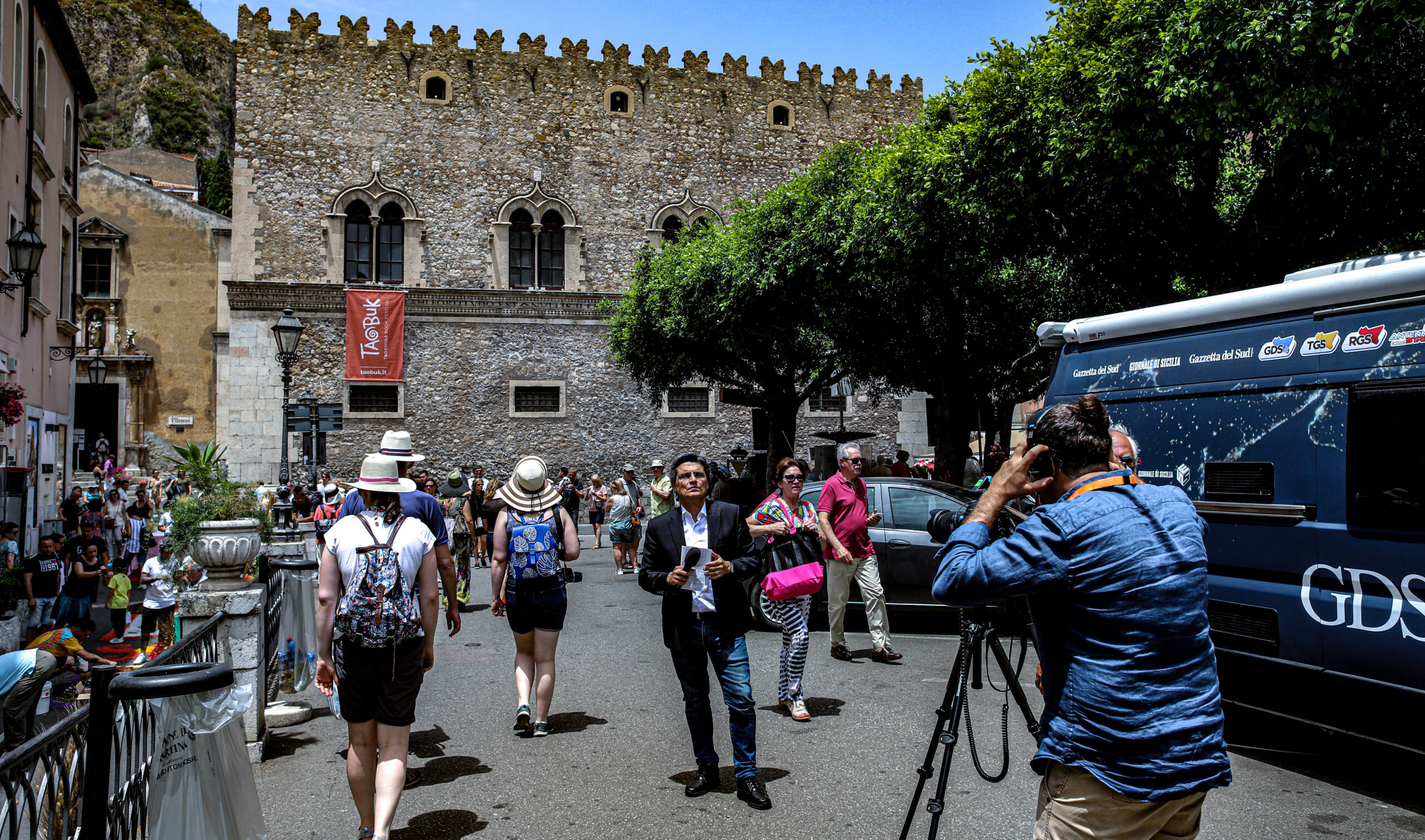
Taobuk and the Infiorata: Two Kinds of Public Culture in One Taormina Square
A red banner hangs off the stone face of Palazzo Corvaja. Three letters, a circle, and taobuk.it printed small at the bottom. Under the ficus trees to the right, a broadcast van in the livery of the Gazzetta del Sud group has its awning out and its cables run across the paving. A reporter stands in the open with a microphone and a sheet of notes while the cameraman frames him against the crenellations.
read more
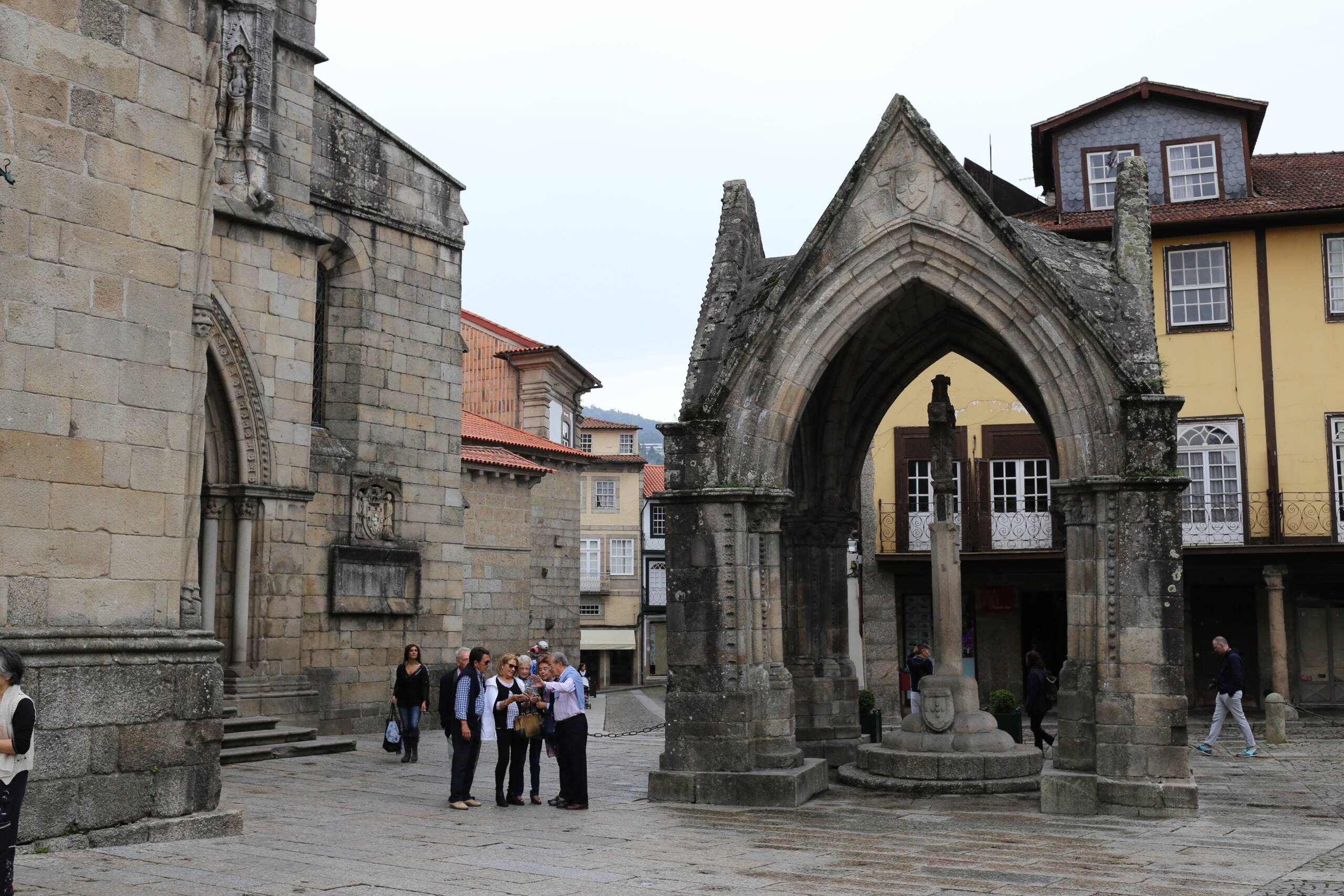
The Padrão do Salado in Guimarães: Why Portugal's Birthplace Commemorates a Castilian Victory
Guimarães is where Portugal starts. Afonso Henriques was born here, fought the Battle of São Mamede here in 1128, and used the town as the base from which he detached the county of Portucale from León and made himself king. Every guidebook says so, usually with the words carved on a wall near the station: here Portugal was born. Which makes the shrine standing in the middle of the town’s oldest square slightly awkward, because it commemorates a battle Portugal fought on Castilian soil, in a Castilian dynastic cause, to defend a Castilian king.
read more
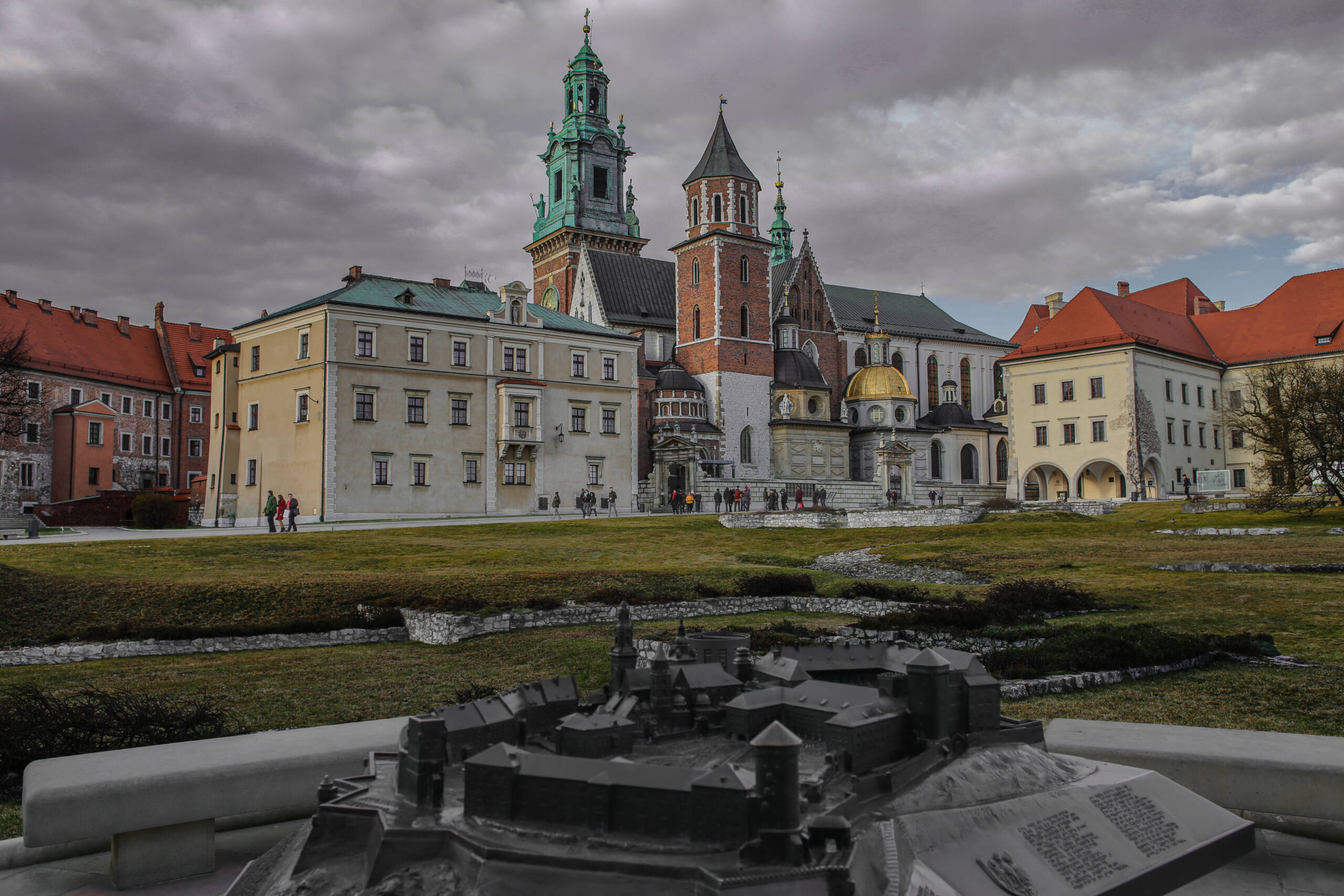
Wawel Hill in Kraków: The Castle, the Bronze Model, and the Churches Drawn on the Grass
Most heritage sites ask you to look at one moment. Wawel makes you look at four or five at once, and it does this on a single lawn, in about the space of a football pitch.
Stand at the south-eastern end of the outer courtyard and the hill lays itself out like a diagram. In the middle distance, the cathedral: a green copper cap on the Sigismund Tower, a brick clock tower with the flag on it, and off to the right the gilded dome of the Sigismund Chapel, which has been catching whatever light Kraków can spare since the 1530s.
read more
Skanderbeg Should Be a Prestige TV Series, and Nobody Has Made It
Every year brings another Roman general, another Tudor court, another Viking. The commissioning meetings clearly have a shortlist and it hasn’t changed since about 2005. Meanwhile there’s a man who held off the biggest military machine in Europe for twenty-five years, from a country you can cross in a day, and he has never had a season of television.
His name was Gjergj Kastrioti. The Ottomans called him Iskander Bey, after Alexander, which is how the rest of Europe got Skanderbeg.
read more
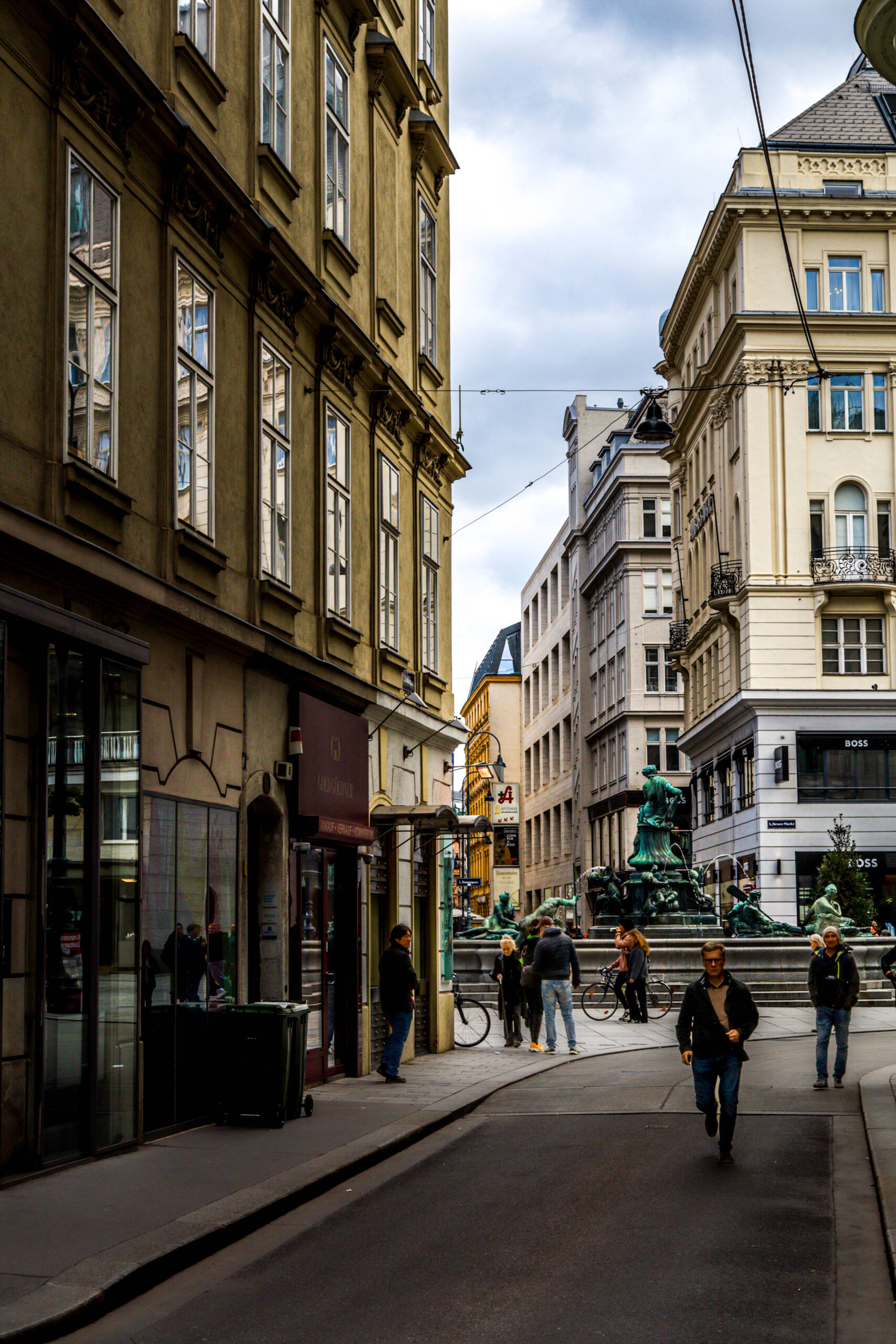
Vienna's Neuer Markt After the Garage: A Frame Down Plankengasse to the Donnerbrunnen
The camera is standing in shade, in a narrow lane in Vienna’s first district, looking east at a square full of flat grey daylight. Everything close to the lens is dark. Everything at the end of the lane is bright. That gap is the whole picture.
The left wall of the frame is a run of ochre plaster, five storeys of it, cut off by the top edge. The windows are tall and narrow with heavy sills and small carved brackets under them, and the glass on the upper floors is doing most of the work in that part of the picture: it is throwing back a mirrored, slightly warped copy of the building on the other side of the lane, so the left third of the image is a facade and a reflection of a facade at the same time.
read more