Whisky Bar Culture: What the Back Wall Reveals About the Room
The first thing a serious whisky bar tells you, it tells you before anyone takes your order. It is written on the back wall.
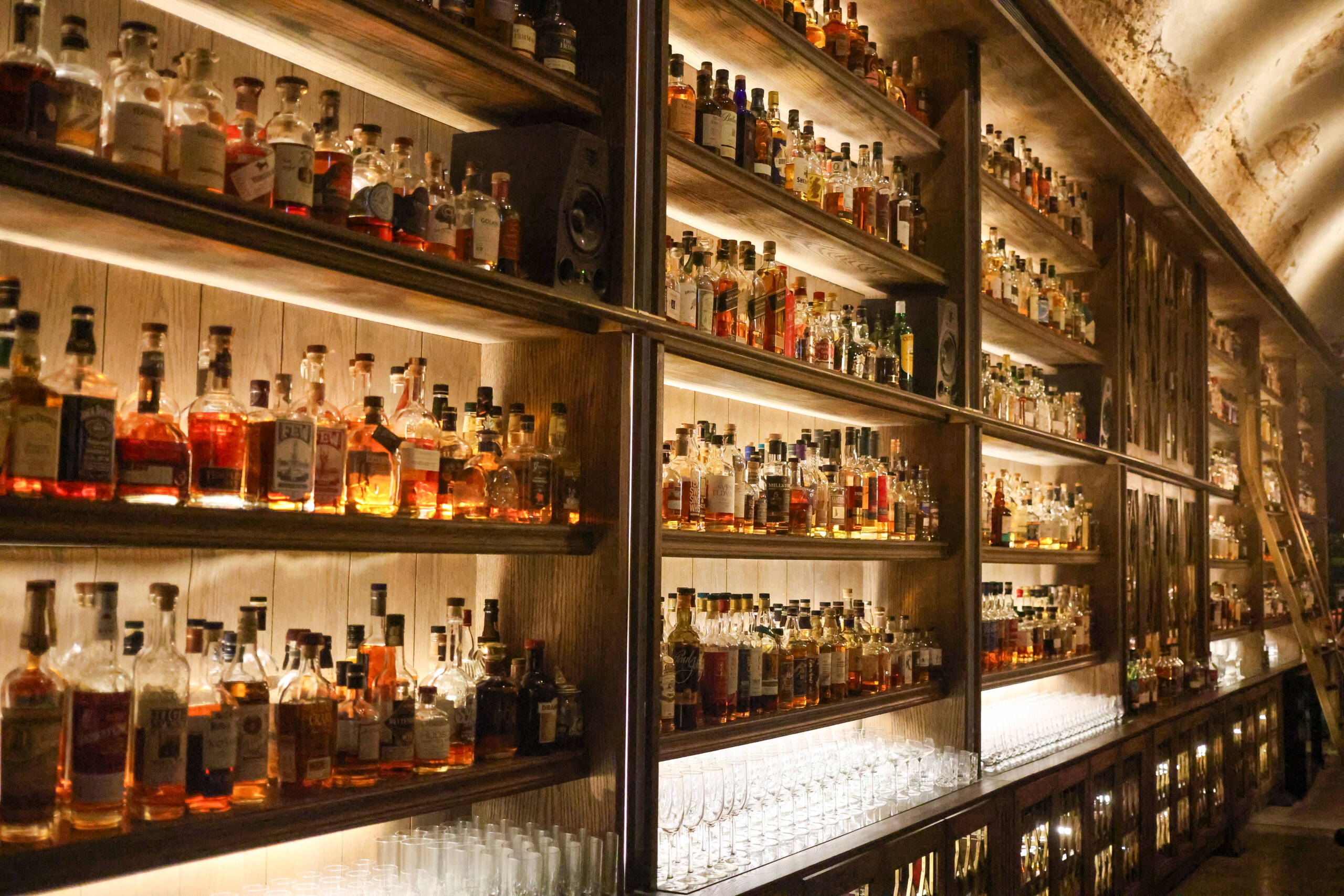
Walk into a room like the one above and the shelving is doing the talking. Bottles stacked four and five tiers high, warm light thrown up from behind the glass so the liquid glows amber and copper, and — the giveaway — a library ladder leaning against the rail because the top shelf is genuinely out of arm’s reach. No bar stocks that vertically for convenience. It stocks that way to be seen doing it. The back wall is the venue’s thesis statement, and the ladder is the exclamation point.
The bottle wall is the identity
There was a time when a whisky bar meant a wall of Scotch and not much argument about it. That era is over, and you can read the shift straight off the shelves. Look closely at a modern back bar and the geography scatters: American craft distillers sitting next to Highland single malts, a Dutch bottling two spaces down from a Tennessee mainstay, world whiskies filling in the gaps that Speyside used to own outright. The collection is no longer a statement of allegiance to one country’s tradition. It is a statement of range.
That range is the point. A deep, deliberately global back wall signals that the people running the room chase bottles for their own sake — that they buy on curiosity rather than on what moves fastest. For the regular, it is a promise: there is always something here you have not tried. For the first-timer doing the five-second scan from the doorway, it is credibility. The wall says we take this seriously long before the bartender confirms it.
Backlighting turns bottles into objects
The lighting is not an accident either. Uplighting a shelf of spirits does something specific — it stops treating the bottles as inventory and starts treating them as objects worth looking at. The glass catches the light, the liquid varies from pale straw to deep mahogany down the row, and the whole wall reads less like a stockroom and more like a display case. It is the same instinct that lights a gallery or a wine cellar: reverence, staged.
This is the aesthetic that separates the whisky bar from the cocktail bar. A cocktail bar puts its theater in the middle of the room, in the shaking and stirring and the show of the pour. A whisky bar puts its theater on the wall and asks you to slow down and look at it. The energy is centripetal — everything points back toward the shelves.
Read the glassware, not just the bottles
The detail most people walk past is along the counter: the rows of glasses waiting under the shelves. In a room built around whisky, the glass shape is a tell. Tulip-shaped tasting glasses and stemmed copitas — narrow at the rim to funnel the aroma — mean the house expects you to nose the pour and sit with it. That is a tasting room’s kit, not a highball factory’s. A bar that lays out that glassware by the hundred is telling you what it thinks you came to do.
And it is telling you the drink is the event. No mixer to hide behind, no citrus and no theater between you and the spirit. The ritual is stripped down to a measure, a glass, and the time you are willing to give it.
Why the culture endures
Whisky bar culture has held up while a lot of drinking trends have come and gone, and the back wall explains why. It runs on two things that do not go out of style: depth and slowness. Depth, because the wall can always grow — there is no finishing a collection, only extending it, and the regulars come back partly to see what got added. Slowness, because the whole room is arranged to make you linger over one glass rather than churn through a round.
That combination is what a cocktail menu cannot quite replicate. A cocktail is a performance that ends when the drink is built. A whisky bar is an archive you drink your way through, one measure at a time, and the wall behind the bar is the catalog. Everything else in the room — the light, the ladder, the glasses lined up and waiting — exists to point you back at it.