Kafka Asked Max Brod to Burn Everything. Max Brod Did Not.
Franz Kafka died on June 3, 1924, of tuberculosis, in a sanatorium outside Vienna. He was 40. He left three unfinished novels, a substantial body of shorter fiction, letters, and diaries, and a note to his friend Max Brod instructing him to burn all of it — “everything I leave behind me… in the way of diaries, manuscripts, letters (my own and others’), sketches, and so on, to be burned unread.” He had given Brod the same instruction verbally on at least two previous occasions. Brod had told him, on both occasions, that he would not do it. Kafka kept giving him the instruction anyway. Whether this constitutes a genuine wish, a test, or a transaction whose outcome both parties already understood is a question that has never resolved, and probably cannot.
Brod published The Trial in 1925, The Castle in 1926, and Amerika (which Kafka had called The Man Who Disappeared) in 1927. He spent the rest of his long life — he died in 1968 — as Kafka’s editor, executor, promoter, and primary interpreter. Without Brod, there would be no Kafka as we know him. This is not a small thing and not a simple one.
The case for burning is not difficult to state. Kafka was a meticulous writer who completed very little; the three novels are unfinished and were left in states that Kafka himself considered incomplete. The Trial ends mid-chapter. The Castle ends mid-sentence. Publishing them, Brod acknowledged, required editorial decisions about chapter ordering and textual variants that were necessarily speculative. Kafka had been clear, in his instructions, that he did not want this to happen. The argument from authorial intent is as strong as it gets.
The case against burning is also not difficult to state, because the books exist and their existence has shaped how the twentieth century understood itself. The Trial, in which Josef K. is arrested one morning without explanation, tried by a court whose jurisdiction is never established, and executed without ever learning what he has been accused of, is among the most precise descriptions of life under bureaucratic authoritarianism ever written — and it was written in Prague in 1914-1915, before Stalinism, before show trials, before most of what it turned out to describe had happened. The word “Kafkaesque” has entered nearly every major language as shorthand for a specific experience of institutional absurdity. The word did not exist before Brod made the decision he had promised not to make.
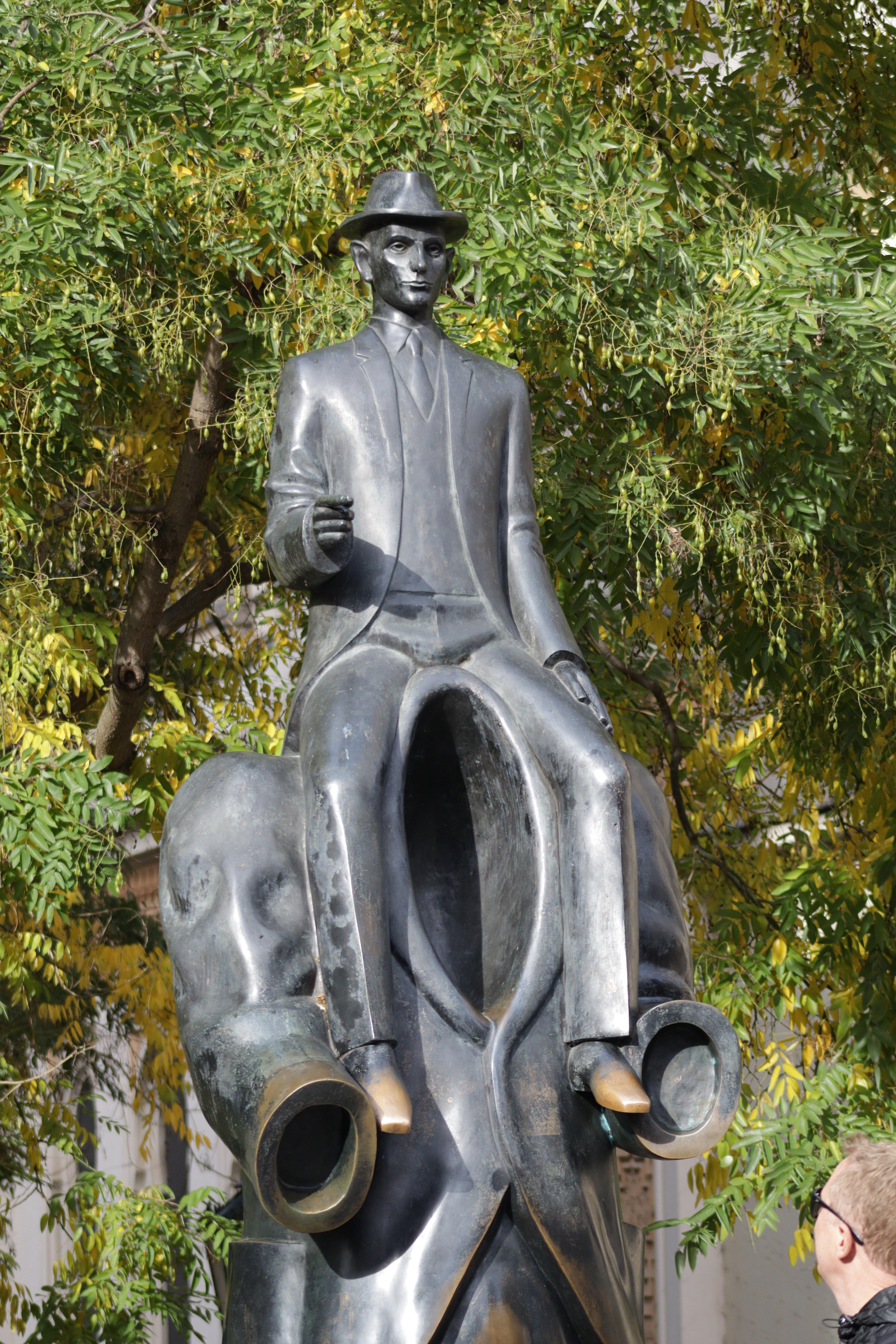
The biographical situation is, itself, almost Kafkaesque in structure: a man who could not finish what he started, who was aware of the gap between his ambition and his output, who spent years in a Prague insurance office writing legal documents by day and literature by night, who had three broken engagements to two women, who wrote to his fiancée Felice Bauer across five years in letters totaling thousands of pages, and who could not bring himself to either marry her or stop corresponding. His father, Hermann Kafka, a self-made businessman who considered literature a waste of time and his son’s inability to establish himself in ordinary life a personal affront, haunts the work in ways that do not require interpretation: The Metamorphosis is about a man who wakes up as an insect and becomes, for his family, a source of shame before becoming invisible; Kafka wrote it in 1912. The Letter to His Father — a 47-page document he wrote in 1919 and never sent — is a detailed account of psychological domination that makes the fiction look restrained.
The manuscripts’ subsequent physical history added another layer of difficulty to the question of what to do with them. Brod fled Prague in March 1939, on the last train before the Nazi occupation, carrying a suitcase of Kafka’s papers. He settled in Tel Aviv, where he continued editing and publishing. After Brod’s death in 1968, the manuscripts passed to his secretary Esther Hoffe, then to her daughters, and then became the subject of a decade-long legal battle between the Hoffe estate and the National Library of Israel, which claimed the papers belonged to the Jewish people collectively. Germany and Israel both sought custody. The German Literary Archive in Marbach argued that Kafka’s work belonged to German literary culture. The Israeli Supreme Court ruled in 2016 that the papers belonged in Jerusalem. They are there now.
The question of what Kafka intended — and what intention means when the person who held it is gone and the alternative is that the work does not exist — is not answerable in terms that satisfy all claimants. Brod made a choice. The choice was a violation of an explicit request and an act of preservation that the century required. Both things are true, and neither cancels the other.
What Kafka said he wanted and what he actually arranged are not the same thing. He chose, twice, a friend he knew would refuse.