Bayonne's Musée Basque Is Easy to Walk Past, and That Is the Mistake
The building on the corner does not look like a museum. It looks like what it was, a merchant’s house from the seventeenth century, cream render going grey at the base, a wide gable with brown timber under the eaves, shutters that still work. You come over Pont Marengo from the other side of town, you notice the red banner, and without the banner you would keep walking.
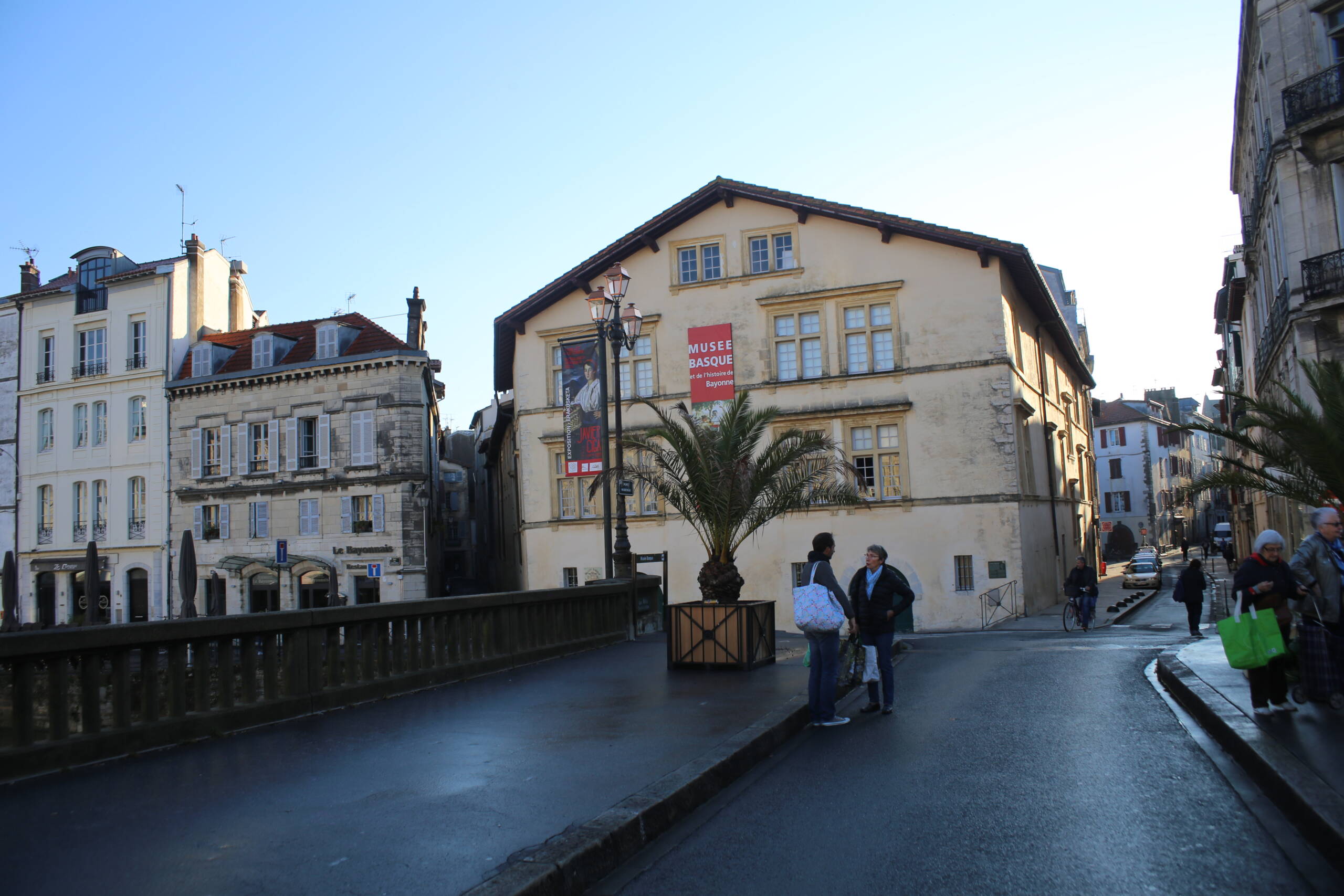
That is the Musée Basque et de l’histoire de Bayonne. The house is called Maison Dagourette and it sits on the quay where the Nive runs the last few hundred metres before it meets the Adour. The river splits Bayonne in two. Grand Bayonne on one bank with the cathedral and the shopping streets, Petit Bayonne on the other with the museum, the bars, and the narrow blocks that fill up entirely during the fêtes in summer. Five bridges stitch the halves together. You will cross them more than you expect.
Inside, the museum is not what people assume from the name. There is Basque rural life, yes, the makilas and the farm tools and the reconstructed interiors. But the collection that stays with you is the funerary steles, disc-headed stones pulled from village cemeteries, carved with sun wheels and crosses and initials of people nobody can name any more. A whole room of them, standing up like an argument about how long anyone has been here.
Then there is the rest of it. Pelota, with the gloves and the chisteras and the old match posters. The port, the whalers who went to Newfoundland out of a river town most people now associate with ham. And the chocolate, which arrived with Sephardic families who came north over the border from Spain and Portugal and settled in the Saint-Esprit quarter across the Adour. Bayonne made chocolate in France before anywhere else did, and the museum treats that as a story about refugees rather than a story about confectionery, which is correct.
The banner in the photograph was for a Javier Ciga show. Ciga was a Navarrese painter, trained in Madrid and Paris, and he went home to paint villagers in the Roncal valley at a moment when that world was already going. The portraits are direct, unsentimental, closer to Spanish realism than to anything folkloric. The museum runs shows like this fairly often and they are usually the reason to check the schedule before you plan a day.
Two practical things. It closes on Mondays for most of the year, and it is worth an hour and a half rather than the twenty minutes you have budgeted between lunch and the cathedral. Labels are in French and Basque, with less English than you might want, so the audio guide earns its price.
The palm tree in the planter is not a decoration somebody imported for atmosphere. Bayonne is nine kilometres from the Atlantic and the winters here are soft. The photo was taken in the cold months. Blue sky, wet tarmac from earlier rain, two women stopped mid-conversation on the corner, someone on a bike coming up the hill, everyone in coats. That is Bayonne out of season, which is the best time to have it.