Alte Nationalgalerie in Berlin and the Art of Looking Across Centuries
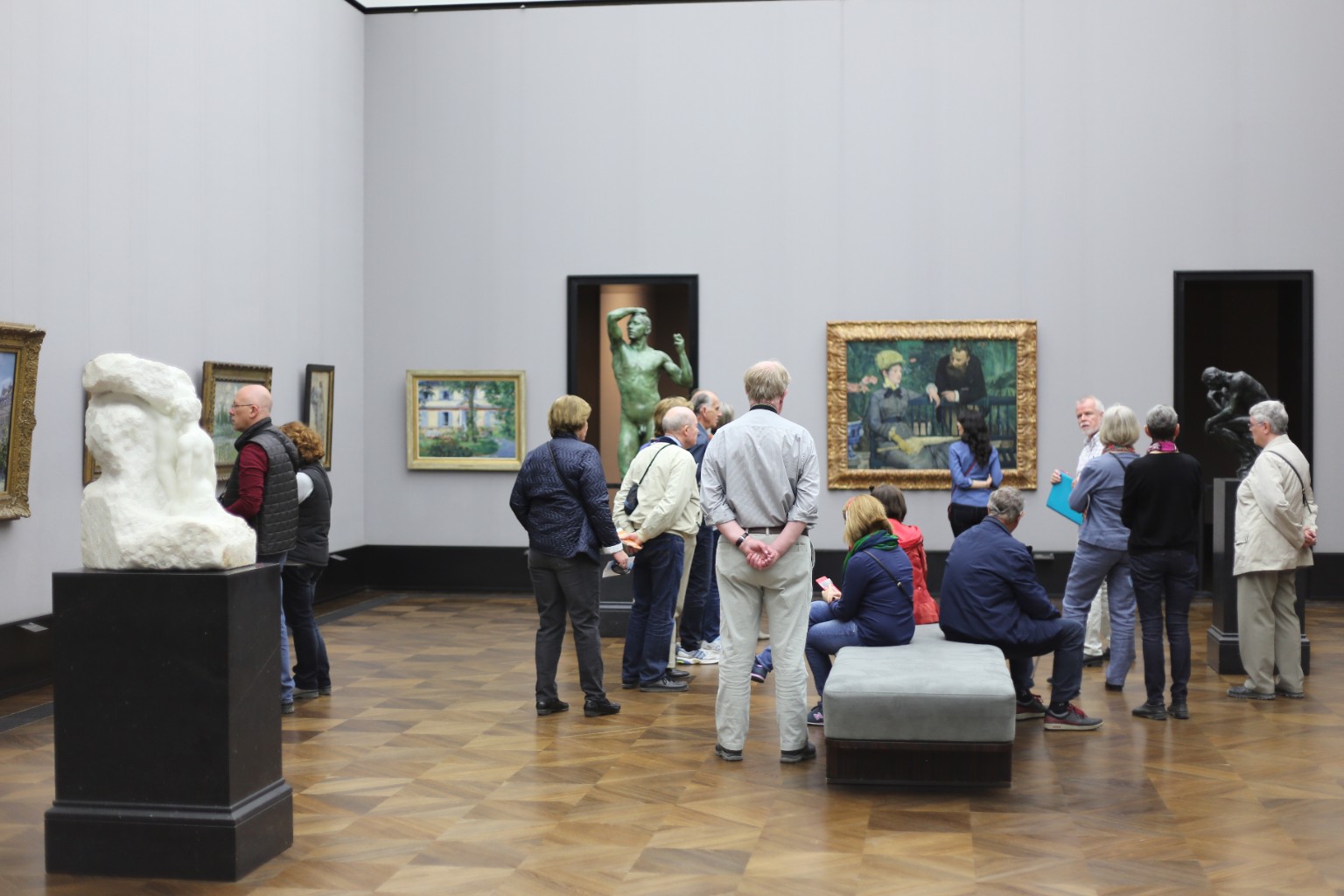
In a gallery of Berlin’s Alte Nationalgalerie, visitors gather around paintings and sculptures. One person sits on a bench, while others stand in front of a gilded frame or look toward a figure in an alcove. The parquet floor is worn smooth by countless footsteps. The scene belongs to an ordinary museum afternoon, but the works on display belong to a much longer story.
The Alte Nationalgalerie stands on Museum Island, where Berlin assembled a remarkable group of public museums. Its building opened in 1876, based on plans by Friedrich August Stüler and completed by Johann Heinrich Strack. The collection concentrates on nineteenth-century art, including Romanticism, Realism and Impressionism. Walking from one room to another can feel like moving through decades of changing ideas about the world.
Photograph: MediaInstances.com.
A Room That Holds Different Times
In the photograph, a pale sculpture dominates the foreground. Farther back, a green-toned standing figure occupies a niche. A large painting in an ornate gold frame draws visitors toward the opposite wall. The works have different origins, but the gallery places them in conversation with one another.
That is one of the quiet powers of a museum. Objects made for different patrons and audiences become neighbors. Their original settings disappear, replaced by a room designed for comparison. We gain a view across artistic periods, while the objects acquire a new life in public.
The Human Figure in Sculpture
The Alte Nationalgalerie is known for its sculpture collection, which includes works by Auguste Rodin. Rodin gave the human body a new physical and emotional intensity. Instead of presenting only polished ideals, he explored weight, tension, movement and thought. The viewer is drawn to walk around the figure, to notice how its shape changes from one position to the next.
The visitors in this photograph seem to understand that looking takes time. Some lean toward the works, others stand back. A few sit quietly. Each encounter is brief compared with the age of the art, yet it is precisely these repeated encounters that keep a collection alive.
Berlin’s Public Memory
Museum Island grew over the nineteenth and early twentieth centuries as a place where collections could be seen by the public. The Alte Nationalgalerie’s own history runs through the changes that reshaped Berlin, including war, division and restoration.
Nothing dramatic is happening in this photograph. People are walking, talking and studying the objects. That is its appeal. Art made long before the visitors were born remains present, waiting for another person to stop and look.